
Introduction
Imagine a greenhouse where climate control, lighting, irrigation, nutrient delivery, energy management, weather forecasting, and crop monitoring all work together as one coordinated system.
Now imagine the opposite.
A climate control system collects temperature and humidity data. A lighting platform tracks daily light integral (DLI). Irrigation operates on its own schedule. Nutrient dosing lives in a separate interface. Energy data is buried in another dashboard. Cameras and vision systems generate valuable insights that rarely make it back into operational decisions.
Despite advances in greenhouse automation, many CEA facilities still rely on multiple systems that were not originally designed to share data or work together seamlessly.
As growers face rising labor costs, increasing energy prices, and pressure to improve yields, the hidden cost of siloed systems becomes harder to ignore.
The Hidden Cost of Siloed Systems
When we say a facility operates in silos, we mean that critical systems function independently, each with its own data, interface, and decision-making process.
Common examples include:
- Climate control managed in one platform
- Lighting controlled through another
- Irrigation schedules maintained separately
- Nutrient dosing systems operating independently
- Weather data viewed in a third-party application
- Energy consumption tracked elsewhere
- Camera and vision systems disconnected from environmental controls
Each system may perform its individual task well. The challenge is that plants do not grow in silos. Every environmental factor influences the others. When systems operate independently, operators spend more time gathering information, interpreting results, and coordinating actions—and less time optimizing production.
Integration Is More Than Connecting Equipment
Many companies describe integration as the ability to connect devices together - that is only the first step.
True integration occurs when data from multiple systems can be analyzed, shared, and used to drive coordinated decisions. A climate sensor may indicate elevated temperatures.
That information could influence:
- Ventilation strategies
- Irrigation timing
- Nutrient uptake expectations
- Lighting intensity targets
- Energy consumption forecasts
The value is not simply in collecting the data, the value comes from understanding how one system affects another.
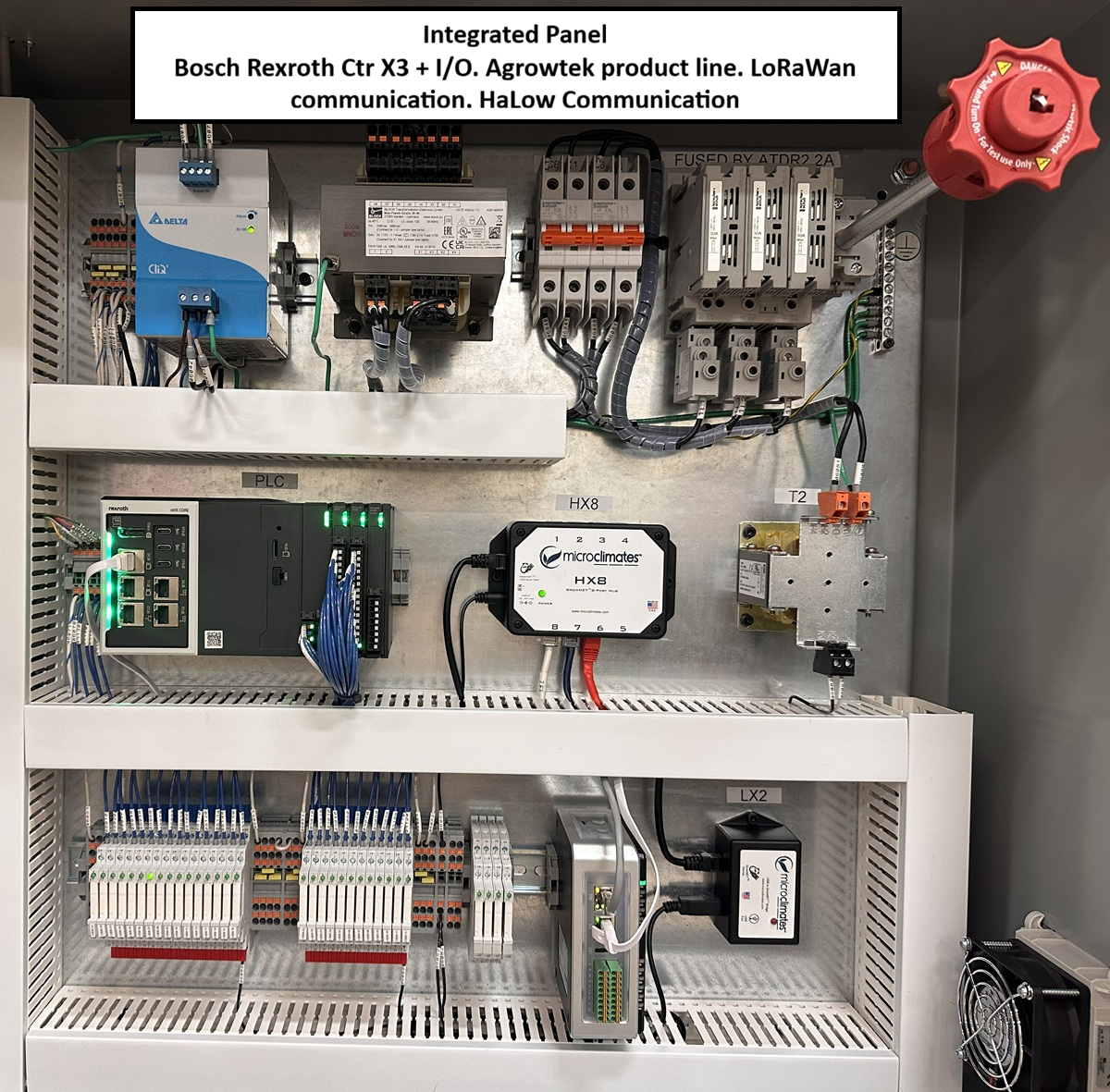
Plants don't grow in silos and neither should technology. This integrated panel combines solutions from multiple vendors into a single connected system.
Plant Health Happens Between Systems
Plant performance is rarely driven by a single variable.
Consider a crop experiencing stress: Plant stress is often the result of multiple interacting factors, including temperature, humidity, vapor pressure deficit (VPD), light levels, irrigation frequency, nutrient availability, disease pressure, and energy management decisions.
When these data streams exist in separate platforms, identifying relationships becomes difficult. When they exist together, growers can begin to see patterns that were previously hidden. This is where integration begins to move beyond operational convenience and becomes a production strategy.
Imagine a World Without New Silos
The future of agriculture will generate even more data than it does today.
Facilities are increasingly deploying:
- Wireless sensors
- Vision systems
- AI applications
- Energy monitoring platforms
- Predictive analytics tools
- Autonomous equipment
Without integration, every new technology risks becoming another silo. The goal should not be to collect more data, it should be to create a connected environment where data can move freely between systems and contribute to better decisions.
The Bigger Picture
Imagine a facility where information flows across applications rather than stopping at departmental boundaries:
- Climate data influences lighting strategies.
- Lighting performance influences irrigation decisions.
- Irrigation events affect nutrient delivery.
- Weather forecasts help anticipate greenhouse demands.
- Energy consumption is analyzed alongside production outcomes.
- Vision systems validate whether environmental strategies are producing the desired crop response.
The result is better situational awareness and more informed decision-making, not simply increased automation.
“We Have an API” Is Only the Beginning
Many platforms advertise integration through APIs. APIs are important, but having an API does not automatically create interoperability.
Successful integration requires:
- Common data structures
- Reliable communication
- Shared context between systems
- Long-term maintainability
- Open access to data
The most successful operations will be those that can incorporate new technologies without rebuilding their infrastructure every time a new solution enters the market.
Open Ecosystems Create Freedom
As the industry evolves, growers increasingly want flexibility. They want the ability to choose the best climate system, the best lighting solution, the best irrigation equipment, and the best analytics tools without being locked into a single vendor ecosystem.
Open architectures make this possible.
Instead of forcing operations into one technology stack, integrated platforms can create a foundation where multiple technologies work together. That flexibility becomes increasingly valuable as facilities expand and technology continues to evolve.
Integration Creates the Foundation for AI
Artificial intelligence depends on data - more importantly, it depends on connected data.
AI can identify patterns, predict outcomes, and recommend actions only when it has access to information across the operation. If climate, irrigation, lighting, nutrients, weather, energy, and crop performance remain isolated, AI can only see part of the picture.
Integrated systems provide the context required to transform data into actionable intelligence.
The Future Is Connected
The conversation around integration is often focused on hardware compatibility, but the bigger opportunity is operational intelligence.
The facilities that thrive over the next decade will not necessarily be those with the most technology. They will be the ones that connect technology effectively. Integration is no longer about connecting equipment, it is about connecting information, creating operational visibility, and building a foundation that allows growers to continuously improve production.
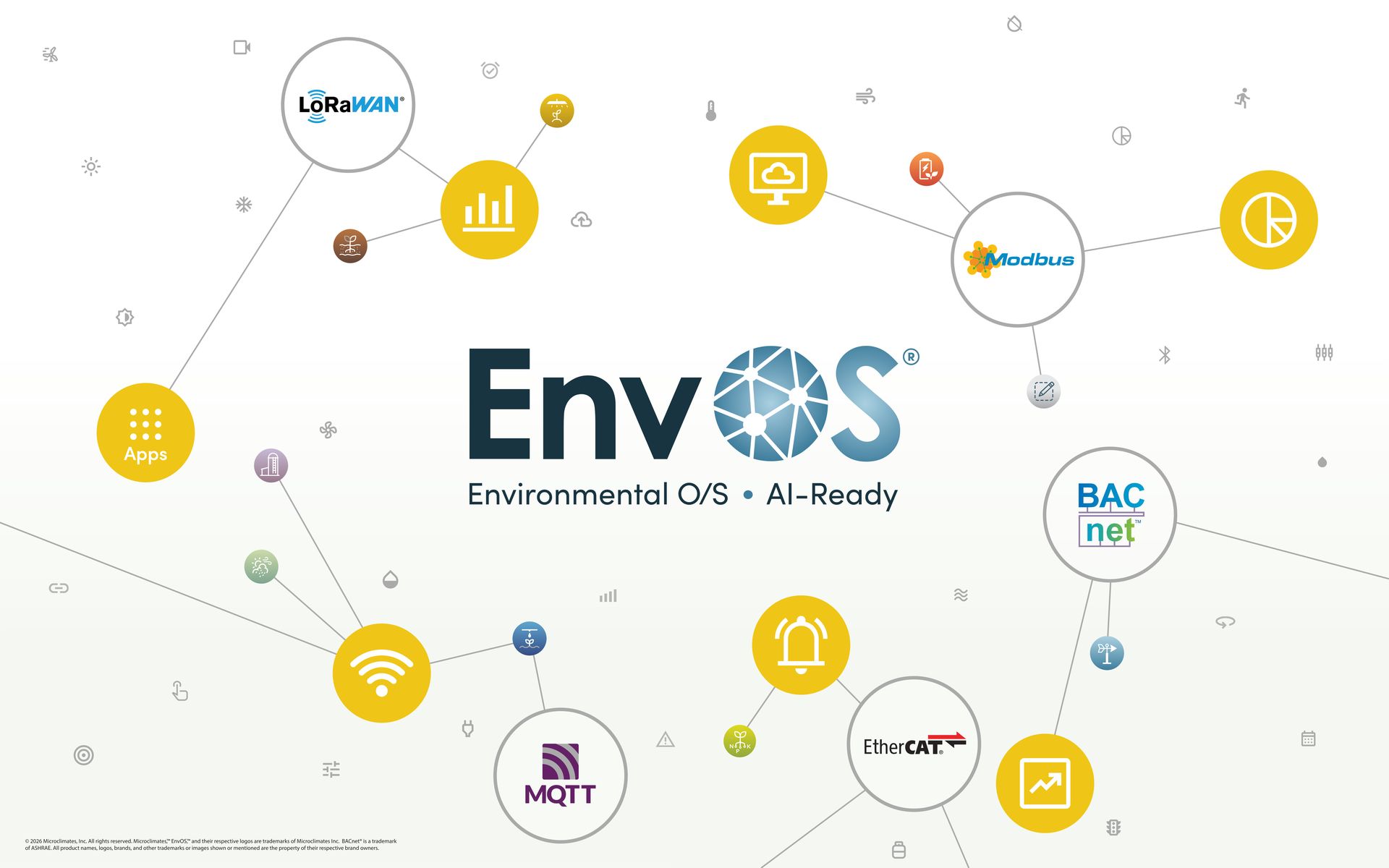
Environmental operating systems are emerging as a way to connect equipment, data, and applications across the operation—providing a common foundation for monitoring, control, analytics, and AI.
A Practical Example
At Microclimates, we frequently connect technologies from multiple manufacturers into a single operational environment.
A facility may use:
- Bosch Rexroth controllers for automation
- Agrowtek devices for environmental monitoring and control
- LoRaWAN wireless sensors for distributed data collection
Individually, each technology solves a specific problem.
Together, they create a connected ecosystem where data can be analyzed, visualized, and acted upon across the entire operation.
That is the difference between connecting equipment and integrating systems, and it is where the future of CEA is heading.